

CONTEXT, CONSTRAINTS & GOALS
CONTEXT
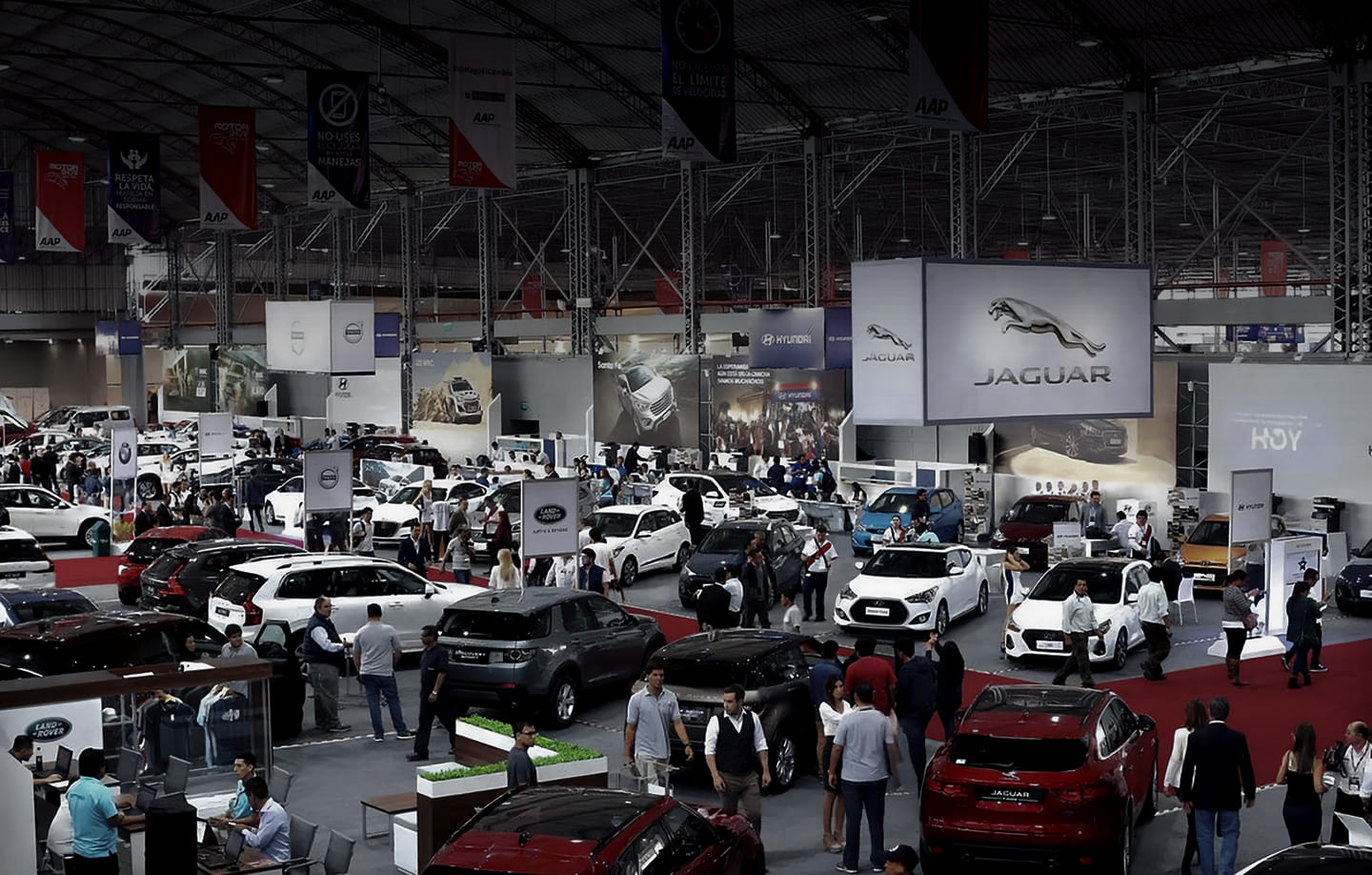
At a major international motorshow, Mazda faced a structural limitation: only a small portion of the product lineup could be physically showcased.
Eight new models were launching that year, yet only three vehicles fit on the stand. Visitors had no way to explore unavailable models, compare trims, or check pricing. Most left having seen only what happened to be on display.
At the same time, sales advisors were overwhelmed. High inquiry volume turned simple questions into long waiting times. Many visitors disengaged within minutes, often moving directly to competing brands.
Mazda needed a system that could extend the physical stand digitally, support fast, independent decision-making, and perform reliably in a chaotic, high-traffic environment.
CONSTRAINTS
The motorshow context imposed strict operational and technical constraints that directly shaped the solution.
Environmental constraints
shaped behavior
- High-traffic, high-distraction
public space. - Extremely short attention
windows. - Strong privacy concerns
when sharing personal data. - Multi-day event with zero
tolerance for instability.
Technical constraints
shaped architecture
- iPad-only deployment.
- No App Store distribution.
- Unreliable or unavailable internet
connectivity. - Offline-first performance across
multiple devices.
The experience had to function independently of network availability while still enabling secure lead capture through deferred, device-to-device handoff.
Traditional web-based solutions were ruled out.
This required a self-contained system optimized for local execution.
Business Goals
The experience needed to:
- Digitally extend the physical stand.
- Deliver instant, accurate product information.
- Enable fast, private, self-service quote generation.
- Reduce dependency on sales advisors.
- Capture higher-quality leads at scale.
- Remain stable throughout a multi-day event.

Success was measured by conversion,
not aesthetic polish.

Role & Scope
My Role
I led UX and UI design end-to-end, working directly with business, engineering, and on-site operations to ship a production-ready system for the event.
Scope of Work
- User research & behavioral validation: Observing real behavior in high-distraction public environments to simulate motorshow conditions.
- UX strategy & interaction design: Designing dual quote flows (on-device + QR continuation), hybrid navigation patterns, and progressive disclosure.
- UI design & system architecture: Building a modular, touch-optimized component system aligned with Mazda’s visual identity.
- Technical specification & collaboration: Defining offline-first requirements, documenting interaction logic, and supporting implementation.
- QA & deployment support: Testing live builds, resolving interaction issues, and overseeing multi-device installation on site.
Human & System Insights
What changed wasn’t preference, it was behavior.
Observation from previous events revealed consistent patterns.
Decision-making shortens. Privacy concerns intensify. Patience disappears.
From on-site observation and real-world testing, several behavioral shifts became clear:
- Decisions compress under time pressure.
- Privacy collapses in public environments.
- Long forms are actively avoided.
- Discoverability must be immediate, not instructional.
- Visitors want autonomy, but also reassurance.
Rather than relying on stated preferences, research focused on observed behavior under pressure.
Three insights consistently emerged.
Insight 1: Visitors Avoid Waiting
Sales advisors were overwhelmed.
Simple questions required 10–15 minutes of waiting.
Most visitors chose to disengage rather than wait often moving directly to competing brands.
Insight:
In high-traffic environments, waiting isn’t neutral friction.
It’s a conversion killer.
Insight 2: Information Is Expected Immediately
Visitors repeatedly asked the same questions:
- “What colors does this model come in?”
- “How much is the GT version?”
They expected instant answers, not mediated conversations or delayed lookups.
Insight:
Information delays break momentum at the exact moment decisions are forming.
Insight 3: Public Forms Felt Exposing
During prototype testing, participants physically shielded screens with their hands while entering personal data.
Privacy concerns weren’t theoretical.They were immediate, embodied, and visible.
Insight:
In public spaces, privacy isn’t a preference. It’s a prerequisite.
Experience Principles
- Discoverability without overwhelm: Highlight top-selling models
first, with full access for deeper exploration. - Speed over completeness: Enable quote requests in three taps,
optimized for fast decisions, not long sessions. - Privacy by design: Allow sensitive data entry to continue privately via QR, away from the public space.
Critical Path Design
It was about defining the shortest path to value for both users and the business.
Core journey:
Explore → Compare → Quote
This wasn’t about showing everything Mazda had. It was about showing the right things fast.
ITERATION UNDER REAL CONSTRAINTS
Design decisions were validated through rapid iteration in realistic conditions:
- On-device quote flow vs. QR-based continuation
- Tablet ergonomics and posture testing
- Completion-time optimization
- Error handling in offline scenarios
The experience was tested not in ideal conditions, but in the physical, chaotic reality of the event.
Success was measured by conversion,
not aesthetic polish.
A/B Testing 1: Privacy vs. Friction
The Question
Would visitors feel comfortable entering personal data on a shared tablet in a crowded, public environment?
The Test
Guerrilla testing in a public shopping mall simulating motorshow conditions.
- 40 participants.
- Tablet mounted on stand (public visibility).
- Two flows rotated equally.
The Hypothesis
Respecting privacy would increase completion, even if it added an extra step.
Privacy over speed.
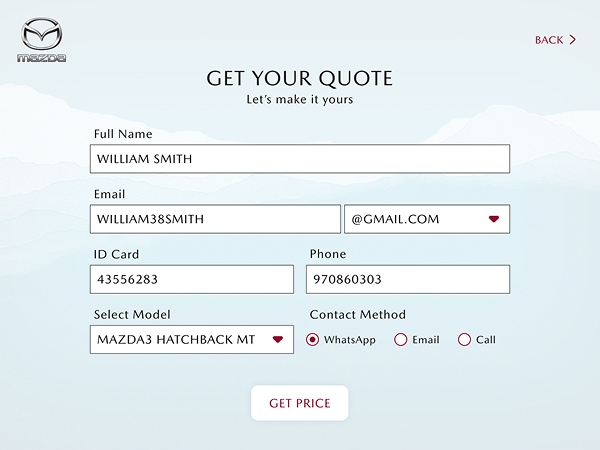
A
On-device form
Complete quote directly on tablet
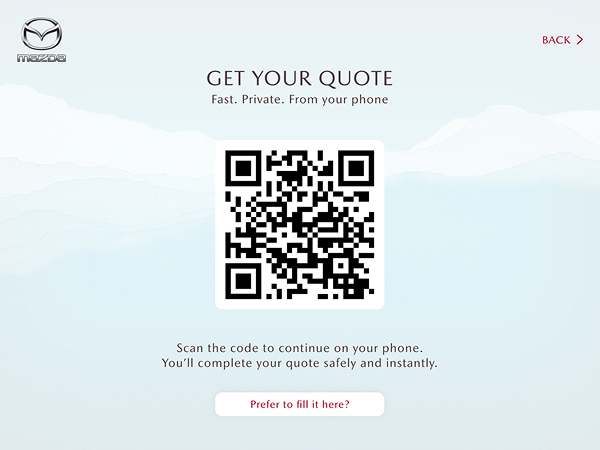
B
QR continuation
Continue privately on personal phone
The Result
Behavioral signals:
- 45% actively chose the QR continuation.
- On-device users physically shielded the screen.
- Visible hesitation when entering personal data.
Performance:
- +30% faster completion via phone continuation.
- Higher form completion overall when both options were available.
The Decision
Ship both flows. Let users choose their comfort level.
Why it worked
Privacy isn’t a feature. It’s a threshold.
When users feel exposed, they don’t convert.
When they feel safe, they complete.
A/B Testing 2: Exploration vs. Efficiency
The Question
Do visitors prefer guided browsing, or direct access when they already know what they want?
The Test
Task-based testing in a public setting.
Scenario: “Find the Mazda CX-5 and check its price.”
The Hypothesis
Sequential navigation helps discovery.
But it slows intent-driven users.
Speed should match intent
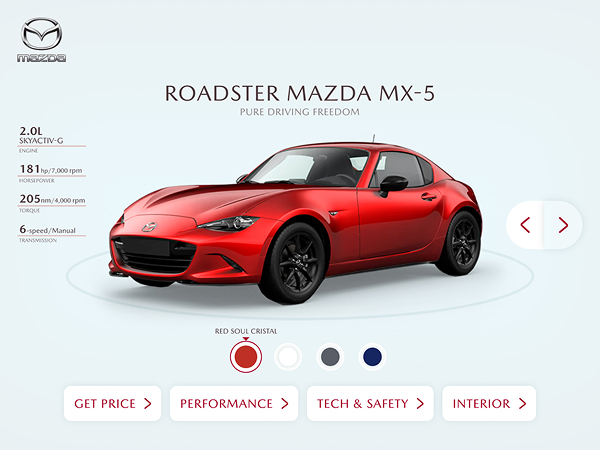
A
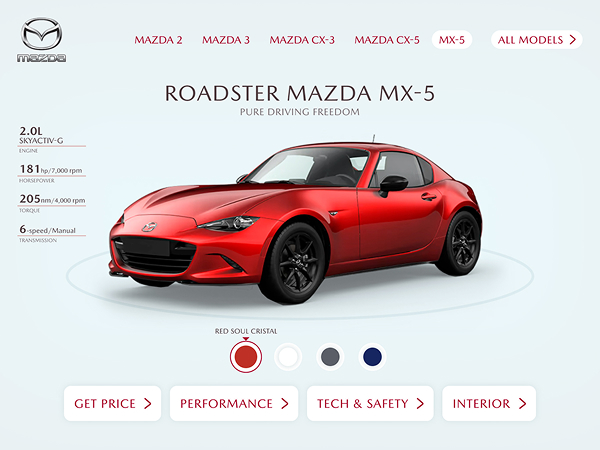
Sequential, arrow-only navigation
B
Direct access menu + “All Models”
The Result
Performance:
- Goal-driven visitors reached their model 70% faster with direct access.
Behavioral patterns:
- Intent-driven users skipped browsing and searched immediately.
- Exploratory visitors preferred guided, step-by-step discovery.
Two distinct behaviors emerged.
The Decision
Design for both:
- Direct access for known intent.
- Guided browsing for exploration.
Why it worked
Navigation isn’t about hierarchy.
It’s about intent.
Forcing one path penalizes half your users.
Scalable Interface System
The interface was built as a modular system that proved its value over time.
What made it last:
- Component library scaled from 3 to 8 models without refactoring
- Content structure absorbed pricing changes and new trim levels
The strongest validation wasn’t the first event. It was that Mazda chose not to redesign for events two and three.
When constraints drive design, systems scale.
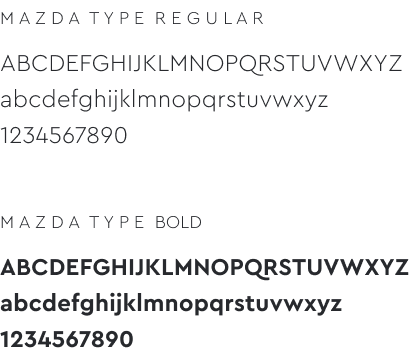
TYPOGRAPHY
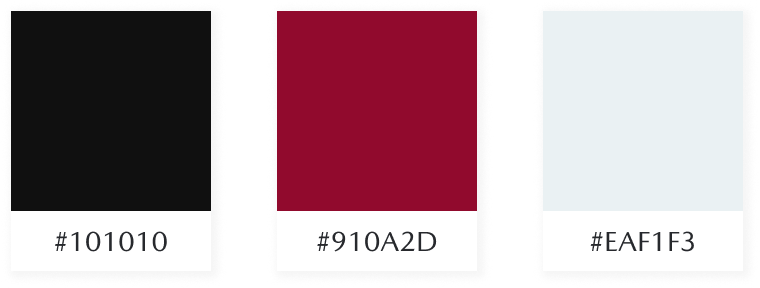
COLORS
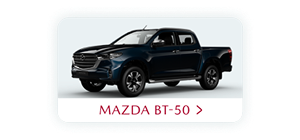
COMPONENTS
NAME
STATE DEFAULT
STATE PRESSED












INTERACTION

UX PRINCIPLES
These weren’t abstract UX ideals.
They were operating rules for a public, high-pressure environment, where attention was scarce, privacy was fragile, and decisions happened fast.
Discoverability without overwhelm
Surface top-selling models first.
Keep deeper exploration available, without forcing users to process everything at once.
Speed over completeness
Optimize for fast decisions, not long sessions.
Quote requests were designed to be completed in three taps.
Privacy by design
Treat privacy as a prerequisite.
Sensitive data entry could continue privately via QR, away from the public space.
These principles directly informed navigation, interaction patterns, and the A/B testing decisions that followed.
Impact at Scale
Compared to the previous year's manual process:
- Decisions compress under time pressure.
- Privacy collapses in public environments.
- Long forms are actively avoided.
- Discoverability must be immediate, not instructional.
- Visitors want autonomy, but also reassurance.
Rather than relying on stated preferences, research focused on observed behavior under pressure.
Three insights consistently emerged.
Final Insight
Great UX isn’t about adding more.
It’s about designing the right constraints.
By narrowing choices, simplifying decision paths, and protecting privacy in a public environment, the experience shifted from information overload to confident action.
The numbers validated the approach.
But the strongest signal came later.
Models changed. Pricing evolved. Content updated. The structure held.
When constraints drive design, systems scale.


